Employment supports to reduce recidivism: Philadelphia, PA
Published on: December 9, 2020
MORE ABOUT THE STRATEGY USED IN THIS CASE STUDY Transitional employment and re-entry support, Job placement services and supports
Overview

Summary
In 2016, Philadelphia had one of the highest rates of incarceration in the country, with 833 people incarcerated for every 100,000 residents. A contributing factor was the county’s high recidivism rate - nearly two-thirds of individuals released from prison experienced rearrest or re-incarceration within three years.
In 2015, the Center for Employment Opportunities (CEO) expanded to Philadelphia. The program aimed to reduce recidivism by creating stability for individuals returning from prison.
CEO offers four services: workforce readiness training, transitional employment with daily pay, job coaching and placement, and a year of job retention support.
Keys to the program’s success included strong partnerships with the Pennsylvania Department of Corrections and individual parole officers, which helped identify individuals who would benefit from the program; support from then-Mayor Michael Nutter’s administration, which served as a key convener; and productive relationships with businesses and government agencies to identify transitional work contracts.
Results and accomplishments
25%
Reduction in incarceration for new crimes among Center for Employment Opportunities (CEO) participants
48%
Increase in employment after 36 months among CEO participants
16%
CEO participants recidivate 16-22 percent less often than non-participants
Serving over 1,000 formerly-incarcerated residents: From 2018 to 2023, the Center for Employment Opportunities (CEO) has provided services to over 1,000 Philadelphians recently released from incarceration.
Securing permanent employment for participants: The program has placed nearly 440 men in permanent, unsubsidized jobs with an average wage of nearly $12 per hour.
Scaling up through partnership: A 2018 agreement with the Pennsylvania Department of Human Services allows for the state to reimburse CEO for up to 50 percent of expenses for anyone receiving Supplemental Nutrition Assistance Program (SNAP) benefits. This partnership allowed CEO to serve significantly more individuals in Philadelphia and throughout the state and connected CEO participants to vital food and transportation assistance.
Recognition at the state level: CEO was recognized as a state-wide best practice in providing re-entry services by a 2020 report released by the Office of Pennsylvania Governor Tom Wolf.
Mental health funding: CEO has received funding through the Group Violence Intervention (GVI) initiative to provide mental health support to participants, demonstrating a commitment to holistic support. This funding has enabled the provision of mental health services, achieving a 71% engagement rate in the program's first month.
Solution

What was the challenge?
High recidivism rate: A 2013 report from the Pennsylvania Department of Corrections found that Philadelphia County had the second-highest overall recidivism rate in the state, with 65.5 percent of all individuals released from prison experiencing rearrest or re-incarceration within three years.
High levels of incarceration: A 2016 report from the Vera Institute of Justice showed that Philadelphia had one of the highest rates of incarceration in the country, with 833 people incarcerated for every 100,000 residents.
Few programs serving recently-released individuals: Philadelphia had few programs serving individuals recently released from prison. Without support in reestablishing themselves, finding employment, and creating stability in their lives, many recently-released individuals faced desperate circumstances.
What was the approach?
Prioritizing the issue: Mayor Michael Nutter’s administration placed a high priority on reducing recidivism, lowering levels of incarceration, and improving public safety in Philadelphia.
Selecting an evidence-based solution: The GreenLight Fund, a venture philanthropy fund, had previously developed close partnerships with the State of Pennsylvania and the Nutter administration. After a year of due diligence on reentry programs, GreenLight recommended that Philadelphia partner with the Center for Employment Opportunities (CEO). CEO had established a track record of success, starting as an independent organization in New York in 1996. By 2015, it operated in nine cities.
Support from release to permanent employment: The program seeks to reduce criminal behavior and recidivism by offering services that create stability immediately upon individuals’ return from prison. The program consists of four phases: workforce readiness training, transitional employment with daily pay, job coaching and placement, and a year of job retention support.
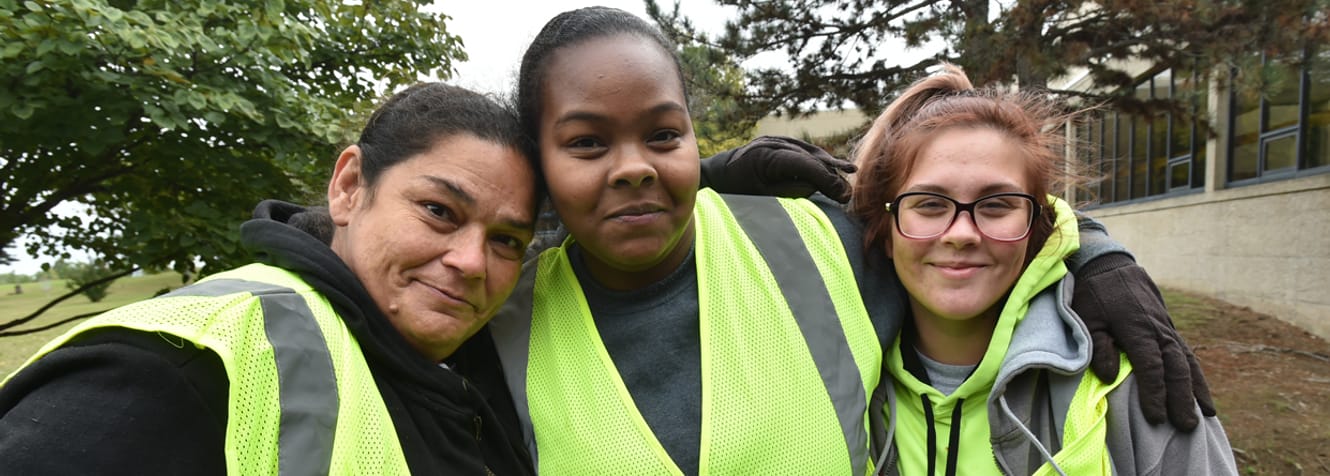
Blending work with coaching: Participants work up to four days a week on a CEO work crew, gaining the knowledge, experience, and training to become permanently employed. Once per week, participants attend one-on-one job coaching and development programs.
Who were the key stakeholders?
Philadelphia Mayor’s Office: The Nutter administration served as a critical convener for CEO, including the organization in a number of citywide initiatives, introducing its leaders to potential partners, and making it part of the broader citywide conversation about incarceration and recidivism. We are currently collaborating closely with the Office of Violence Prevention and the Group Violence Intervention to enhance our programming significantly. This includes establishing a specialized transitional work crew and access to free mental health services tailored for individuals at a heightened risk of either experiencing or perpetrating gun violence
Businesses and government agencies: CEO works closely with local businesses and government agencies in order to secure traditional work contracts for participants.Philadelphia Parks and Recreation has been one of our longest standing city partners. With only a brief hiatus after the pandemic we have been providing transitional work crew services, including litter abatement, hazardous waste collection and beautification, since 2015.
City of Philadelphia, State Department of Corrections, & GreenLight Fund: These groups provide funding to CEO through a partnership agreement. The Department of Corrections funds the majority of CEO’s vocational activities, the City of Philadelphia supports the organization’s initial social enterprise capacity, and the GreenLight Fund provided growth capital to help launch the program.
Current funding partners: Current funders include Pennsylvania’s Commission on Crime and Delinquency, Bureau of Community Corrections, SNAP E&T, William Penn Foundation and others
How was this approach funded?
Support from city government: CEO Philadelphia’s first transitional job opportunities were supported by the City’s Department of Parks and Recreation, which made an initial commitment of $330,000 for two work crews stationed in city parks.
Leveraging state and philanthropic dollars at launch: Nearly half of CEO Philadelphia’s funding at launch came from the Pennsylvania Department of Corrections, which contracted with CEO to provide re-entry services. Additional launch funding came from the GreenLight Fund, the Curaterra Foundation, the Patricia Kind Family Foundation, and Bank of America.
Securing ongoing support from state agencies: Since launch, the Pennsylvania Bureau of Community Corrections has provided $1.7 million in support to CEO through a per diem rate for every participant the program serves. In 2018, the Pennsylvania Department of Human Services, via the SNAP Employment and Training Program, began to provide a 50 percent reimbursement for services for every participant enrolled in SNAP.
Timeline

Mayor Nutter had long made public safety one of his top priorities, and upon winning a second term, his administration begins a number of new initiatives focused on reducing violence, incarceration, and recidivism.
The GreenLight Fund, led by Matt Joyce in Philadelphia, identifies CEO as being a very promising strategy for reducing recidivism. Discussions begin between the city, state, and GreenLight on how to bring the program to Philadelphia.
The parties create a unique partnership where the Pennsylvania Department of Corrections commits to funding the bulk of CEO's vocational activities, the City of Philadelphia (through the Department of Parks and Recreation) supports the organization's initial social enterprise capacity, and the GreenLight Fund provides time-limited growth capital to help launch the program.
Participant referrals come from the Pennsylvania Department of Corrections. Two work crews are funded by the City of Philadelphia's Department of Parks and Recreation and provide approximately 150 individuals with transitional job opportunities annually.
During this period, CEO deepens its relationships with a range of state and local policymaking and advocacy groups. These partnerships build CEO's ability to understand the local re-entry landscape, provide greater access to services for participants, and advocate for justice reform policies like inclusive hiring.
CEO contracts with CBRE, a real estate company, in the South Philadelphia Navy Yard in its first transitional jobs partnership supported by a business.
A CEO report finds that in FY2018, CEO’s Philadelphia office achieved stronger outcomes than any other CEO location. The program particularly stands out for its results in 180-day employment retention rates.
Partnership allows for the state’s Supplemental Nutrition Assistance Employment and Training (SNAP E&T) program to reimburse partners for up to 50 percent of expenses in providing vocational training services.
The transitional jobs partnership with PolyScience adds to a roster of work crews serving the CBRE Navy Yard, East Falls Community Development Corporation, Green City Works, and Waste Management.
In partnership with the Office of Violence Prevention, the Mayor’s Office of Community Empowerment and Opportunity, and the Managing Directors Office, CEO begins taking referrals and creates a specific transitional work crew to serve individuals impacted by gun violence in the city.
CEO's partnership with the City of Philadelphia and BMH provides free mental health services to all CEO participants.
Implementation

What factors drove success?
- Providing comprehensive supports: The structure, support, and pay that CEO provides to its participants as soon as they are released from prison is at the core of what makes the model effective.
- Partnerships with businesses and government agencies: CEO’s ability to serve individuals returning from prison depends on transitional work contracts from government agencies or businesses. In Philadelphia, the City’s Department of Parks and Recreation provided support for the program’s first two work crews.
- Developing an enrollment pipeline: Referrals from the Pennsylvania Department of Corrections and close relationships with individual probation officers ensure that the individuals who can most benefit from CEO’s services are able to enroll.
- Support from the Mayor's Office: Beyond financial support for the initial work crews, the Nutter administration served as a critical convener for CEO, including the organization in a number of citywide initiatives, introducing its leaders to potential partners, and making it part of the broader citywide conversation about incarceration and recidivism.
How did this program consider racial disparities?
Serving formerly-incarcerated individuals: CEO’s core programming seeks to improve outcome for individuals recently released from prison. In Philadelphia, this population is disproportionately people of color. In contributing to better outcomes for this group, CEO helps narrow racial inequities.
Hiring individuals with justice system involvement: CEO Philadelphia prioritizes hiring full-time staff members who have histories of involvement with the justice system. Approximately 90% of CEO Philadelphia staff have previous justice system involvement. In providing high-quality, full-time employment to this group, which is disproportionately people of color, CEO contributes to the narrowing of racial inequities.
How was the plan implemented?
- Creating a pathway to enrollment: Once an agreement is reached with the City, the Pennsylvania Department of Corrections (PADOC), and the GreenLight Fund, CEO immediately begins work with PADOC to formalize a referral pathway for individuals well-suited for participation.
- Building relationships with potential partners: With the help of the Mayor’s Office, CEO begins meeting with local leaders and community-based organizations to build relationships and trust.
- Launching the program: Initial round of referrals from PADOC is made and first 27 individuals begin programming in August 2015.
How was the approach measured and refined?
Developing individualized plans: CEO creates a profile for every participant upon entry that contains their demographic basics, previous work experience, food assistance eligibility, and other information. As participants engage with programming, CEO Job Coaches work with them to deepen these profiles, defining their skillsets and employment goals. These profiles continue to evolve through individuals’ participation and form the basis of every participant’s individualized employment plan.
Setting KPIs for every stage: Key performance indicators include orientation and work crew attendance, internal assessments of job readiness, number of interviews attended, performance feedback on work sites, placement locations, wages at placements, and retention milestones. These indicators are tracked in every individual’s profile.
Using independent evaluation: The organization has undergone four independent analyses in different locations and demonstrated positive results in each study.