Family Spirit Nurture: Navajo Nation (Shiprock, NM)
Published on: February 5, 2026
- Issue Areas
- Early childhood Health and well-being
- Outcomes
- Stable and healthy families

MORE ABOUT THE STRATEGY USED IN THIS CASE STUDY Improving access to health care, Improving access to healthy food, Supports for expecting parents and families with young children
Overview

Summary
Native American children in the United States face high rates of childhood obesity. A leading cause of childhood obesity is from the early introduction and consumption of sugar sweetened beverages (SSBs).
Parents across demographic groups may introduce SSBs for many reasons, including a lack of clean water at home or limited access to healthcare. In the Navajo (Diné) nation, water insecurity and limited access to maternal healthcare–stemming from decades of federal underinvestment – contribute to high rates of childhood obesity and other health challenges.
For years, lower-income Diné mothers experienced high rates of postpartum depression and inadequate postpartum healthcare. In 1995, Family Spirit began serving tribal communities as a culturally responsive home visiting program designed for and delivered by Native Americans.
Beginning in 2017, Family Spirit created Family Spirit Nurture (FSN) to focus specifically on childhood obesity. The FSN curriculum is designed to delay the introduction of sugar-sweetened beverages (SSBs) and promote healthy feeding practices. FSN also helps families address clean water insecurity and connects new mothers with healthcare and other social services.
Keys to FSN’s success was the evidence-based and culturally-aligned home visiting curriculum, strong partnership between researchers and community members, holistic support provided by the home visitors, and a water delivery service to make healthy beverage choices easier for parents.
Results and Accomplishments
- Reducing infant SSB consumption: Families who received home visiting services reported statistically significant reductions in infant SSB consumption at 9 months of age compared to other families in the Diné Nation.
- Improved feeding practices: Family Spirit Nurture participants started feeding complementary foods to their infants 20 days earlier on average than members of a control group (4.61 months vs. 5.28 months), with a higher proportion starting before 6 months.
- High retention rate: FSN sustained a retention rate of about 92%, allowing for home visitors to form strong relationships with the new mothers and to deliver the entire curriculum to participants.
- Replication across the nation: The positive results led to the creation of a toolkit for replication in other communities, including online modules on Coursera for home visiting curriculum training. As of early 2026, the FSN curriculum has been fully incorporated into the larger Family Spirit curriculum and is currently delivered in 75 sites representing 95 communities in 22 states.
Solution

What was the challenge?
High rates of childhood obesity and sugar sweetened beverages (SSBs) consumption: Native American children have among the highest rates of obesity in the United States. One contributing factor to childhood obesity is the early introduction of sugar sweetened beverages (SSBs) to infants and toddlers. Among Native children, overweight 2 to 5 year olds consume 51% more SSBs than non-overweight children.
Community data highlights the challenge: Community input and data from the Diné Nation indicated that many Diné mothers were introducing SSBs to their infants within 6 months of giving birth. For infants, consumption of SSBs (such as soda, energy drinks, or fruit juice with added sugar) are associated with higher rates of obesity, poor oral health, diabetes, and cardiovascular disease.
Water insecurity raises the risk of obesity: In 2020, the Indian Health Service (IHS) estimated that 37,000 people in the Diné Nation (approximately 20%) did not have piped water in their homes. When families do not have readily available access to clean drinking water, SSBs are just as easy to obtain as drinking water–and often cheaper.
New Diné mothers face challenges accessing healthcare: Across the country, new mothers in all demographic groups face mental and physical health challenges within the first year of giving birth. Lower-income mothers in the Diné Nation report higher rates of postpartum depression and are less likely to receive a postpartum checkup compared to higher income mothers
What was the approach?
Expanding Family Spirit home visiting in response to community needs: As part of the Johns Hopkins Center for Indigenous Health, the Family Spirit program has been conducting home visits in the Diné Nation since the 1990s. In Family Spirit's three decades of home visiting, new programs like Family Spirit Nurture (FSN) were created to address community needs, including childhood obesity and structural healthcare barriers for infants and new mothers. Community leaders worked in partnership with researchers at the Johns Hopkins Center for Indigenous Health to create Family Spirit Nurture.
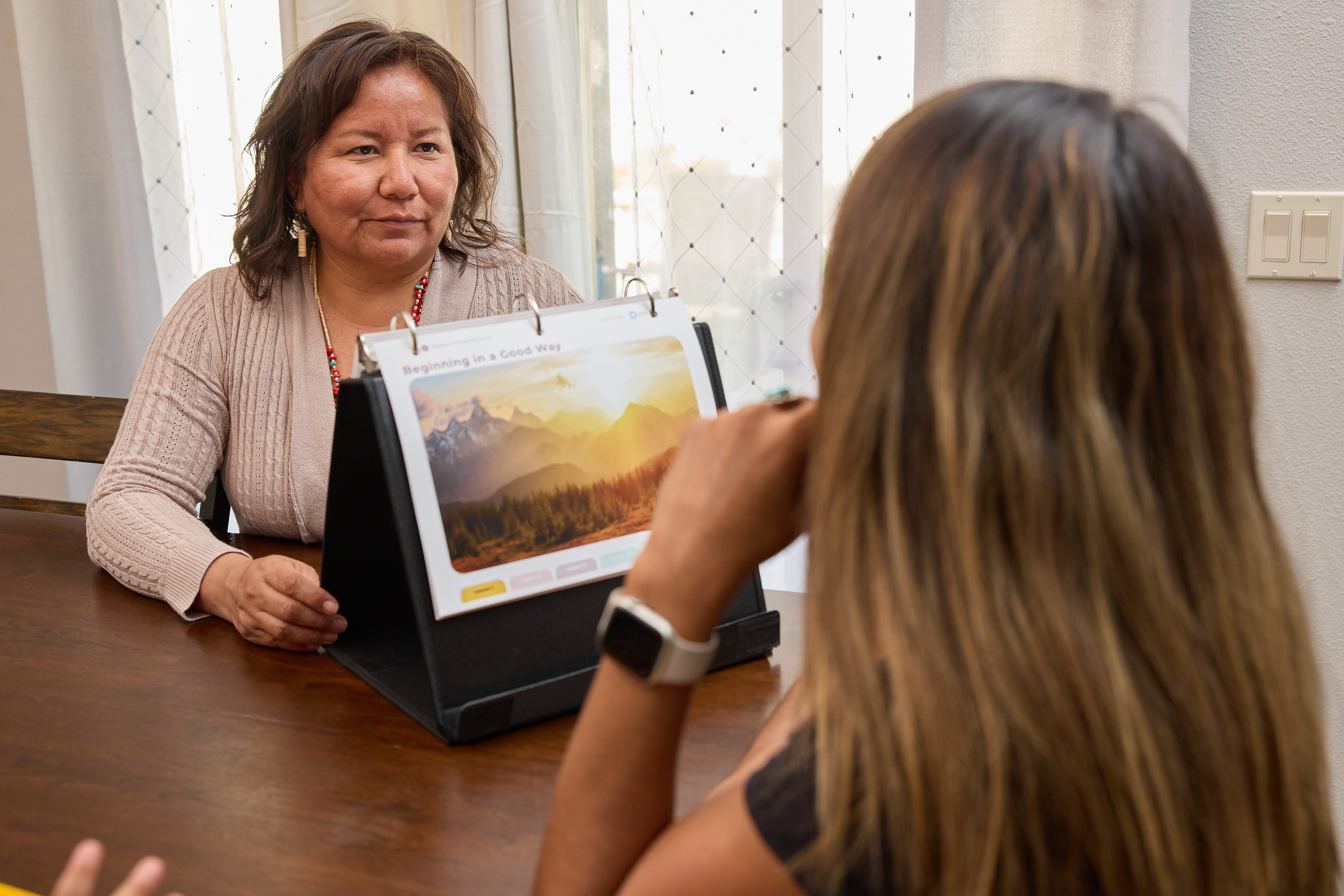
Creating an evidence-based curriculum: Family Spirit Nurture trains Diné home visitors to deliver six 45 minute lessons to new mothers over the course of three months. The home visits begin three months postpartum. Lessons include warm ups to build rapport, interactive activities, visuals to help explain healthy feeding practices, exercises focused on goal setting skills and building self-esteem, as well as summary handouts. Coaching on breastfeeding and nutrition is based on American Academy of Pediatrics guidelines for feeding infants.
Culturally responsive services: The home visiting curriculum was designed by Native people and delivered to Diné mothers. The curriculum includes cultural teachings related to infant feeding, nutrition, and recipes. All home visitor coaches are Diné, and the shared culture and experiences allowed for home visitors to bond with participants and better foster positive behavioral change.
Who were the key partners?
Shiprock Chapter House: Chapter Houses are the local form of government for the Diné Nation. Chapter House leaders are elected and report to the larger tribal Agency, which then reports the overall tribal government. Family Spirit Nurture worked with the Chapter House in Shiprock to receive approval to begin operations. Chapter Houses frequently host community events where FSN engaged with the community and conducted recruitment for the initial cohort.
Community Advisory Board: FSN convened a Community Advisory Board (CAB) of local pediatricians, health department staff, school personnel, social service providers, community organizations representatives, and Chapter House presidents to help orient the project. The CAB served as a window into the community, providing feedback on the study plan and perspective on the challenges families were facing. This ensured that the program design and evaluation methodology were responsive to community needs. Community Advisory Board meetings were open to residents, and allowed project leaders to maintain engagement with community members throughout the program.
Healthcare professionals in the community: Family Spirit Nurture worked closely with OBGYNs, pediatricians, and other healthcare professionals in the community. Healthcare professionals at the Northern Navajo Medical Center helped refer new mothers to the program. Additionally, healthcare workers could observe emerging needs or challenges from the community and share that information with FSN to inform curriculum design and service delivery.
Johns Hopkins Center for Indigenous Health: Researchers at the Center for Indigenous Health worked in partnership with community partners to develop policies, protocols, and training manuals for FSN. Center staff delivered curriculum training for home visitors and provided administrative support, including managing data analysis to evaluate the efficacy of the curriculum.
How was this approach funded?
Public and private grant funding: The Johns Hopkins Center for Indigenous Health helped administer the project and received funding from the Robert Wood Johnson Foundation. FSN also received grant funding from the Navajo Area Indian Health Service Diabetes Program.
Timeline

The Johns Hopkins Center for Indigenous Health in partnership with the Diné, White Mountain Apache, and San Carlos Apache tribal communities creates Family Spirit to provide home visiting coaching and support to new mothers.
Water insecurity, easy access to SSBs and limited access to healthy food, as well as inadequate healthcare infrastructure contribute to an increase in childhood obesity in the Diné Nation. Several studies document the disparities in childhood obesity rates between Native American children and other racial or ethnic groups.
Reflecting the growing community concern around obesity caused by SSBs, the Navajo Nation Council passes the Healthy Diné Nation Act (HDNA), a 2% tax on unhealthy foods and beverages and a waiver of the 5% sales tax on healthy foods and water.
Family Spirit and the Johns Hopkins Center for Indigenous Health begin designing Family Spirit Nurture to help increase healthy feeding practices for infants and delay the introduction of SSBs. The Community Advisory Board is convened to guide planning.
Following community input, Family Spirit launches Family Spirit Nurture to specifically teach nutrition and reduce SSB consumption. FSN is launched by the Johns Hopkins Center for Indigenous Health in partnership with tribal communities.
FSN works with the Northern Navajo Medical Center to recruit participants in a randomized controlled trial to measure the effectiveness of home visiting on early childhood health and SSB consumption.
FSN adapts to COVID-19, providing additional resources to participants in response to lockdowns and scarcity of certain necessities such as diapers. FSN works to maintain participant engagement and to continue service delivery.
Based on the success of FSN as measured in the experimental evaluation, Family Spirit creates an online toolkit for replication to other communities.
Following the successful implementation of FSN in Shiprock, NM and with the toolkit supporting replication, FSN expands to serve 48 communities in 13 states.
Implementation

What factors drove success?
- Evidence-based, culturally sensitive home visiting: The home visiting curriculum designed for FSN drew on evidence-based pediatric guidelines for healthy feeding combined with cultural teachings from the Diné people, and was delivered by home visitors from the Shiprock community. Part of the effective home visiting model includes the personalized support that home visitors provide–leading sessions with empathy, listening to what mothers need, and providing emotional support. Over time, many home visitors were seen as trusted adults, with many young mothers seeing home visitors more like an “auntie" or extended family member. The strong relationship between home visitors and new mothers helped increase the effectiveness of FSN.
- Additional support for new mothers: Home visitors also frequently helped mothers enroll in services such as WIC and housing assistance. They also often assisted with the process to receive a Certificate of Degree of Indian Blood, which is necessary to qualify for certain tribal and federal benefits. Home visitors also provided transportation to clinics or social service programs. This extra layer of care helped build trust and improve the overall mental and physical health of both new mothers and their children.
- Water filtration and delivery: In service of FSN’s goal of minimizing the consumption of SSBs, FSN installed a water filtration system at their office. Home visitors would deliver fresh, clean water to their families, many of whom lacked ready access to clean drinking water. Project leadership coordinated home visitors filling up and delivering up to 18 gallon drums of fresh water (depending on family size) and then retrieving the drums to clean and refill for families. This was a significant logistical endeavor as families often lived in very rural areas, over an hour drive away. Reducing water insecurity at home for families makes it easier for families to reduce the consumption of SSBs.
- Familiarity with Family Spirit programs: Diné community members were already familiar with the Family Spirit organization due to its established work in the region and research partnerships with tribal communities. Given that tribal communities have historically been subjected to exploitative experiments by outside researchers, Family Spirit's reputation made it easier to both recruit home visiting participants and conduct the experimental evaluation.
What were the major obstacles?
- Adapting to challenges from COVID-19: The COVID-19 pandemic in 2020 interrupted the implementation of FSN. The FSN team adapted to the challenge by continuing their home visits over the phone and eventually with masks. Additionally, FSN still offered wraparound support for their participants, coordinating care packages of basic necessities such as diapers, PPE, and wipes. Home visitors used their relationships with mothers to share information about supplies available at local drives and continued referring mothers to services as needed. One home visitor described the strategy as “enveloping folks with care as a way to keep them engaged.”
- Recruitment challenges: Initially, the team struggled to meet the ambitious initial goal of enrolling 136 mothers, initially recruiting from only one medical center before expanding to other medical centers in the Shiprock area.
- Addressing staff burnout: Home visitors are often confronted with very challenging, sensitive, and sometimes distressing issues that new mothers are experiencing. Home visitors also needed to manage the responsibilities of conducting a randomized control trial on top of their visits To prevent burnout, FSN leadership facilitated weekly meetings where home visitors could share challenges from their work and seek advice or support. FSN leadership recognized that being attuned to the needs of their home visitors and supporting them would help FSN deliver impactful results.
How was the approach measured and refined?
Creating a rigorous randomized control trial: To measure the effectiveness of FSN on infant health, home visiting was implemented with an experimental evaluation where participating mothers were randomly assigned to receive either the FSN curriculum or the standard Family Spirit curriculum, which did not focus on SSBs but rather on childproofing homes, safe travel, and strategies to avoid abuse and neglect. Home visitors were trained to deliver both as well as collect data needed to measure the impact of FSN.
Refining the FSN curriculum to replicate in other communities: Based on the success of FSN as measured in the experimental evaluation, Family Spirit created an online toolkit for replication. The toolkit includes modules to teach fundamentals for early childhood nutrition-focused home visiting programs and materials to design a culturally responsive home visiting curriculum based on the specific community. As of early 2026, the FSN curriculum is delivered in 75 sites representing 95 communities in 22 states. The FSN curriculum is also available as a stand alone program to any interested community.